
The Movie That Made Me Stop Lying to Myself
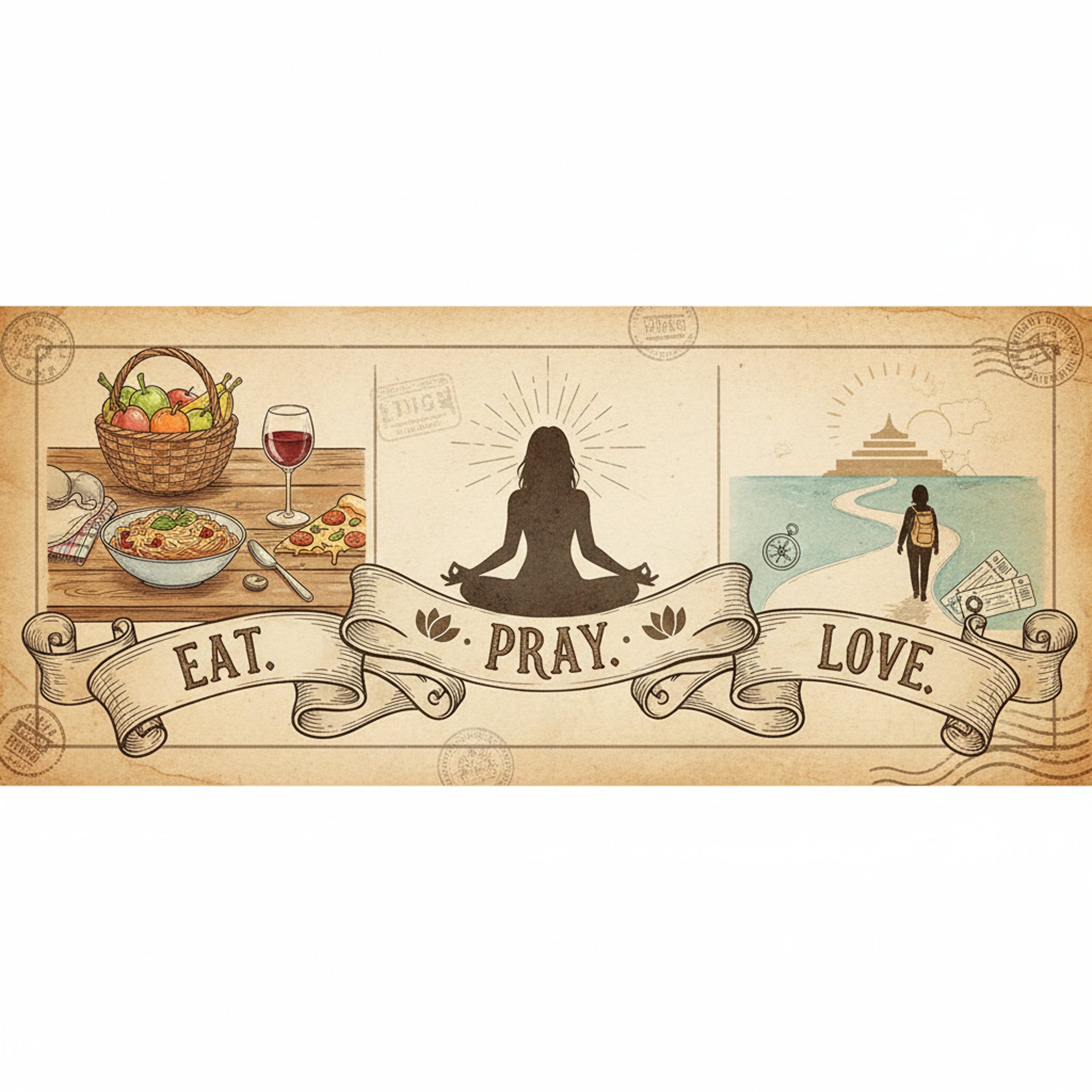
This is the breakdown of the movie that made me stop lying to myself. Not about romance. Not about travel. But about the quiet collapse we don’t talk about — the ways we vanish inside our own lives and call it survival.
REBUILDING THE SELFSELF REFLECTIONCHOOSING YOURSELFMUSIC, OR MOVIE INSIGHTS
Anastasia
11/16/20257 min read




The Movie That Watched Me Back
There are movies you watch once, and there are movies that watch you back every time you press play.
For me, Eat Pray Love wasn’t a love story or a travel fantasy —
it was a quiet, devastating call-out.
The kind you feel in your chest before you’re ready to admit anything out loud.
The scene where Liz walks through her own life and realizes she’s missing…
that was the first crack.
A hairline fracture across the version of herself she’d been pretending to be.
But the part that gutted me —
the part I wasn’t ready to claim as mine —
comes later.
There’s this idea that healing starts with a decision, a flash of clarity, a lightning bolt that tells you who you’re supposed to be.
But in Eat Pray Love, healing doesn’t begin with enlightenment.
It begins with collapse —
with walking through the life you built and feeling like a stranger in every room,
with looking around at everything you poured yourself into and whispering the truth you’ve swallowed for years:
I disappeared somewhere along the way.
1. The First Truth: Disappearing Inside a Life You Built
Liz asks, “Why didn’t I see myself in any of it?”
And suddenly I wasn’t watching her anymore —
I was watching me.
Because even after her divorce, she falls into another relationship that begins to fail almost immediately —
not because he’s terrible,
not because she doesn’t care,
but because she’s repeating a pattern so many of us know too well:
pouring herself into other people to avoid dealing with herself.
And I don’t just mean romance.
Friends.
Family.
People who needed her.
People she leaned on.
People she used as shields against her own emptiness.
It was a mirror I didn’t want.
A truth I didn’t ask for.
But a truth I recognized instantly.
2. The Second Truth: Distraction Masquerading as Living
When Liz says,
“I’ve always been dating a guy, or breaking up with a guy.
I’ve never given myself two minutes to just deal with myself…”
I felt that in my marrow —
not because of men,
but because of every distraction I used to avoid myself.
The next project.
The next craft.
The next idea.
The next obsession.
The next person who needed rescuing.
The next crisis that kept me from sitting alone in the quiet.
My craft room is full of half-finished pieces — abandoned ideas, untouched projects —
and if I’m being honest…
They look a lot like the way I treat myself.
Start with passion.
Lose myself in the rush.
Disappear before it’s done.
Not because I don’t care.
But because dealing with me feels harder than drowning in anything that isn’t me.
3. The Third Truth: Leaving With Nothing Permanent — On Purpose
Liz does something terrifying — something people like us rarely do:
she leaves with nothing to stabilize her.
One year.
No permanent job.
No permanent relationship.
No identity she can hide behind.
Just… herself.
She’d spent years floating through her life like a ghost.
So when she finally tears it all down, she chooses to float on purpose:
to drift through places where nothing lasts long enough to hide inside,
where no one’s needs can drown out her own,
where nothing is permanent so she is forced to become the only permanent thing she has.
Italy ends.
India ends.
Bali ends.
Every moment temporary.
Every chapter stripped down to the one thing she kept abandoning:
herself.
That cracked something in me.
Because I realized I’ve always clung to the next anchor —
the next person,
the next project,
the next idea,
the next crisis,
the next distraction —
hoping it would rebuild me into someone I recognized.
But nothing external has ever been stable enough to hold me.
And when everything kept falling apart, I blamed the storms —
never realizing the foundation I kept skipping… was me.
ITALY —
The Part Where She Finally Stops Running
Italy is where Liz begins unclenching her fists.
Not through spirituality,
not through discipline,
but through something embarrassingly simple:
she stops apologizing for being human.
Pasta, wine, laughter —
warmth she didn’t know she needed.
She admits she’s tired of counting calories,
of measuring her worth by the inches of her waist,
of waking every morning already carrying shame.
That line about knowing exactly how much “shame” she needs to take into the shower?
It wasn’t about food.
It was about how many of us carry invisible weights —
pain we don’t even question.
Then the nightgown.
Soft.
White.
Beautiful.
For no one except the woman wearing it.
But she couldn’t buy it.
Because she didn’t know how to want something unless someone else wanted it from her.
She didn’t know how to give herself softness without earning it first.
And I felt that.
How many times have I talked myself out of joy because it was “just for me”?
How many things have I set back on the shelf because I couldn’t justify wanting them?
How many moments have I swallowed because I thought they needed a reason to exist?
Italy hands her this lesson:
You are allowed to enjoy your life
even if it doesn’t benefit anyone else.
And that’s the one so many of us choke on.
Italy isn’t where she finds herself.
It’s where she stops running.
And maybe that’s why this part sticks to me —
not because I’m ready to transform,
but because I’m finally ready to admit how much I’ve avoided it.


INDIA —
The Place Where the Noise Gets Loud Enough to Hear Yourself
India doesn’t ease her in.
It throws her straight into chaos:
heat that clings to your skin,
colors that almost hurt,
poverty and beauty side by side,
noise that collapses inward until it becomes a mirror.
India isn’t serenity.
It’s confrontation.
The chants.
The bells.
The prayers.
The footsteps.
The coughing.
The crying.
The bodies.
The rhythm.
It becomes so loud that the only thing left to hear
is the voice inside her she’s been avoiding her entire life.
Meditation isn’t peaceful.
It’s violent.
It’s every wound she buried rising to the surface all at once.
India becomes a battlefield —
not with weapons,
but with memory.
She breaks in a room so quiet it forces her to hear herself.
And breaking isn’t the ending.
Breaking is the beginning of listening.
Then there’s the man she didn’t even like —
the one who cuts straight through her spiritual performance,
who tells her the truth she didn’t want:
You can forgive the world,
but it means nothing until you forgive yourself.
India doesn’t give her enlightenment.
It gives her collapse.
Collapse is where healing actually begins.


BALI —
Attraversiamo
The Moment You Stand on the Edge of Yourself
Bali was supposed to be the soft ending.
The reward.
The gentle third act.
Instead, it becomes the hardest truth of all:
healing isn’t complete until you have to use it.
When Liz tells Ketut she left Felipe because she “couldn’t keep her balance,”
she isn’t talking about balance.
She’s talking about fear.
Fear of disappearing.
Fear of losing herself again.
Fear that love will demand too much.
Fear she’ll slip into her old patterns.
Fear she’ll choose someone else over herself —
again.
Ketut replies:
“Sometimes losing balance for love is part of living a balanced life.”
And everything inside her shifts.
Because she realizes:
She’s not the woman who loved last time.
She’s not the version of herself who shrank.
She’s not the one who abandoned herself for someone else’s needs.
She isn’t falling backward.
She’s crossing over.
That’s why “attraversiamo” matters.
Let’s cross over.
Not into someone else’s world.
But into her own.
She doesn’t go back to Felipe because she needs a love story.
She goes back because she finally understands:
love isn’t the enemy.
Losing yourself is.




The Emotional Crossing — The Part That Mirrors My Own Life
This is the part that tears me open:
Most people don’t get a Bali year.
Most people don’t get a clean third act.
Most people don’t find someone waiting with gentle hands and patience.
Most people don’t get the cinematic ending.
And I don’t know if I would want that right now anyway —
not in this life I’m still trying to hold together with threads and willpower.
But Bali was never about romance.
Bali was about choosing yourself
even when love knocks on the door.
And my Bali won’t look like hers.
It won’t involve boats or beaches or some man saying all the right words.
My Bali is quieter.
Harder.
More jagged.
It’s the moment I realize I’ve been surviving for so long
I forgot I’m allowed to want more than survival.
It’s the moment I admit I haven’t crossed over yet —
not because I failed,
but because my life didn’t give me the luxury of disappearing.
I’m standing in the doorway
with my hand on the frame,
feeling the edge beneath my feet.
Not behind.
Not lost.
Not broken.
Just not crossed over.
Not yet.
The Final Fatal Paragraph — The Cut That Stays After the Screen Fades
Liz crossed an ocean to find her Bali.
I am crossing through the wreckage of my own life to find mine.
And maybe I haven’t stepped over the threshold yet —
maybe I’m still trembling at the edge —
but the difference now is that I finally see it.
And sometimes that’s where the real crossover begins:
not in the moment you arrive,
but in the moment you decide you’re no longer willing to disappear.
Attraversiamo.
Let me cross over.
Even if it’s only one trembling step at a time.




Connect
Reach out to share stories or questions.
defiantheartcreations@outlook.com