
The Weight I Carry: Breaking the Bloodline
⚠️ CONTENT WARNING This story contains honest descriptions of childhood trauma, suicide, emotional and physical abuse, religious confusion, family violence, and generational wounds. Please take care while reading. The song Bloodline by Alex Warren ft. Jelly Roll reached a part of me I’ve avoided for most of my life. Some songs aren’t just heard — they’re felt in places we’ve buried. This isn’t a breakdown. This is a confession. A remembering. A reclaiming. This piece belongs to The Weight I Carry — a series where I finally speak the truths I grew up surviving, where I face the ghosts in my bloodline, and where I show how a defiant heart is born: by choosing to become the ending instead of the continuation.
GENERATIONAL TRAUMASUICIDESURVIVALEMOTIONAL TRUTH
Anastasia
11/18/202514 min read

BEFORE, AFTER, AND THE STAIRCASE BETWEEN THEM
“take that pain…
pass it down…
like bottles…
on the wall…”
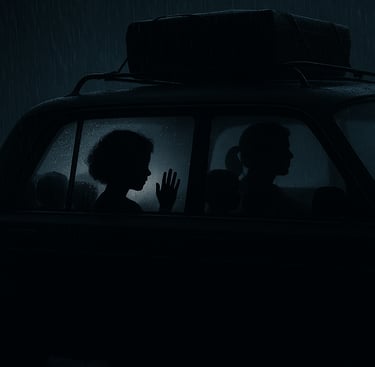
There had been a big fight that night—
the kind of fight where the walls go silent,
the air thickens,
and every child knows not to breathe too loudly.
My father made his usual threat:
“If you don’t get your mother to do what I want,
I’m going to kill myself
and it will be your fault.”
That was the soundtrack of my childhood—
emotional terrorism wrapped in authority.
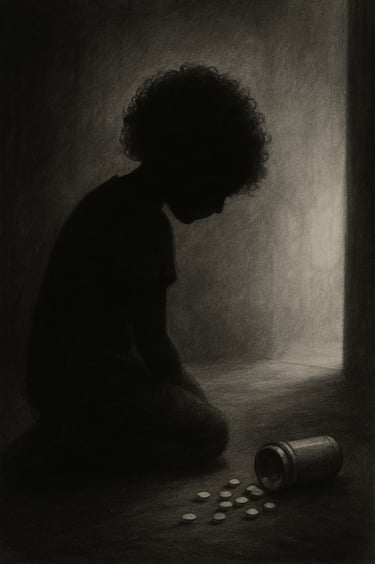
Then he handed me the bottle of pills.
Not dramatically.
Not fearfully.
Just placed it in my hands
like it was my burden to carry.
We assumed—because he had done it so many times—
that he would throw them up,
or spit them out,
or laugh later and say it was all for show.
But this time wasn’t a show.
He lay on the couch,
breathing wrong—
thin, shallow,
like he was already stepping out of himself.
My mom stirred dinner on the stove,
trying to keep the world from collapsing
with the only tool she had:
routine.
Then everything inside my memory fractured,
split open like a film reel melting under too much heat.
One moment I was in the kitchen.
The next—
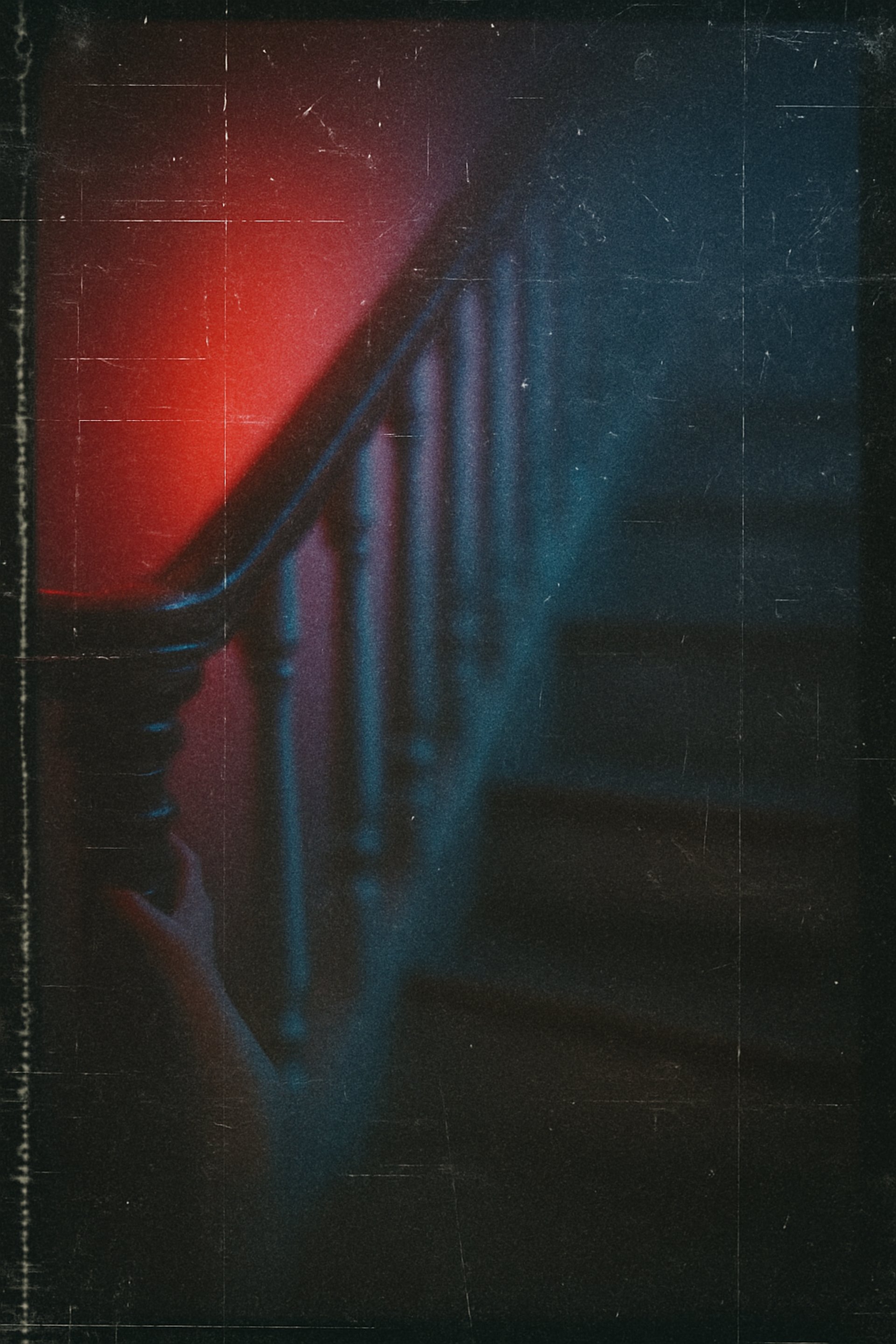
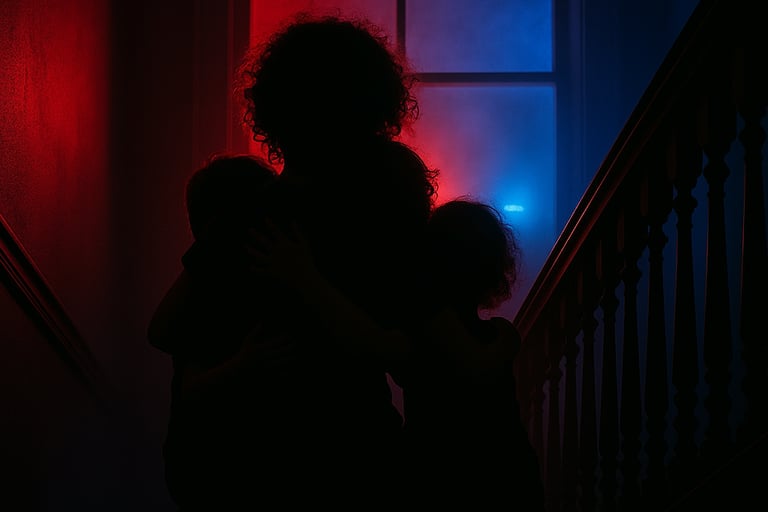
I was on the staircase,
a brother shaking in my lap,
my sister pressed against me
like we were fused by fear.
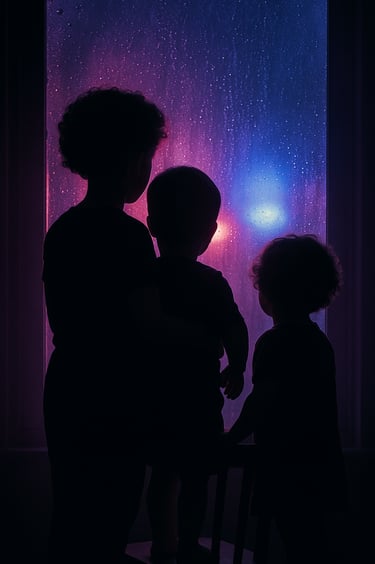
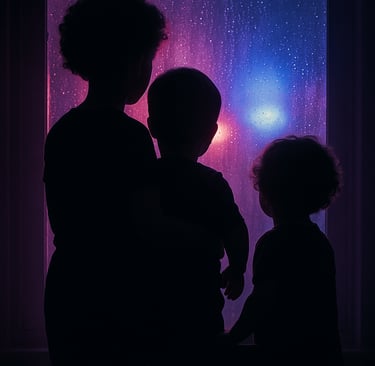
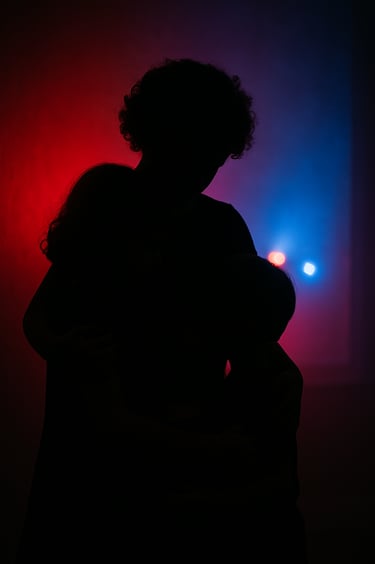
Red and blue lights flashed through the blinds,
painting the living room walls
in a rhythm my heart couldn’t keep up with.
The EMTs struggled to angle the gurney
through the entryway—
it hit the doorway,
slamming loudly,
because his body was heavy
and the space was too small.
I threw up on the stairs.
Not from sickness.
From shock.
My eyes burned that entire night
from crying
and crying
and crying until blinking hurt.
“Shock can be louder than screaming.
My silence was deafening.”
At the hospital—
the lights were too bright,
the air too cold,
the smell too sterile and sharp.
Tubes in his mouth.
Charcoal staining his lips.
Machines humming like a countdown.
Then the funeral.
Not the flowers—
the chemical smell of embalming fluid,
a scent that dug into my memory
and refused to loosen its grip.
The makeup didn’t look like him.
His face didn’t look real.
Nothing looked right.
I kept going up to the casket
again
and again
because a part of me truly believed
he’d open his eyes
and reveal it was all another trick—
another manipulation.
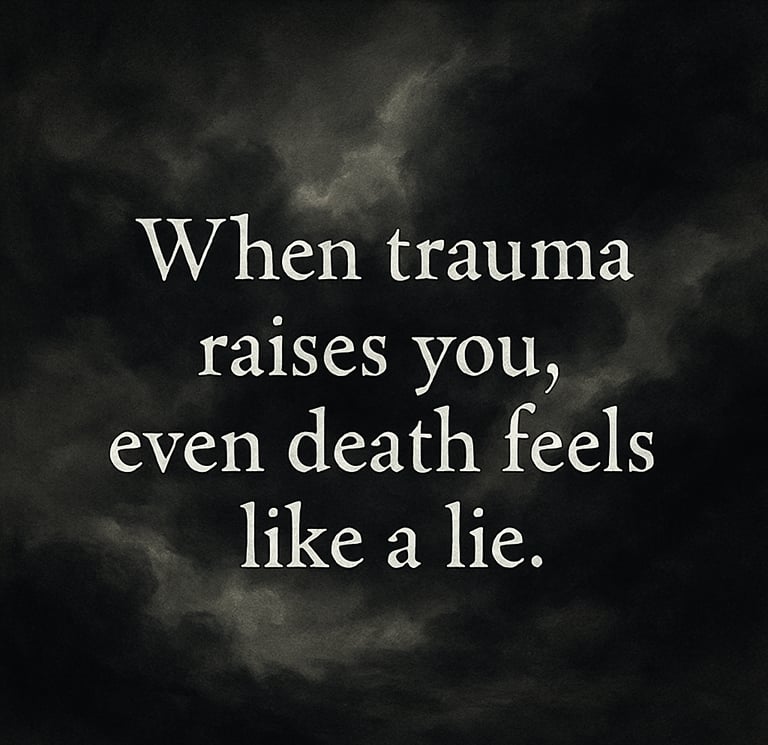
“When trauma raises you,
even death feels like a lie.”
Then came the teachers.
School staff.
Adults holding cards made by classmates
who believed the smiling lie I wore every day.
Before I could face them—
before I could explain anything—
we moved.
No goodbyes.
No explanations.
Just disappearance.
And beneath all of it,
beneath every memory,
beneath every fracture,
one prophecy echoed like a curse:
“I won’t make it to 35.
And neither will you.”
For years,
I believed him.
THE DAYS THAT BLURRED, AND THE GHOST THAT STAYED
“mama said…
her dad’s to blame…
but that’s…
his daddy’s fault…”
The days between his death and the funeral are a smear of color
and silence
and confusion.
Time lost shape.
Memory lost order.
Everything blurred—
as if someone dragged a thumb
through wet paint
until the image underneath disappeared.
I don’t remember the sequence of events.
I remember sensations.
A heaviness in the house
that didn’t belong to the living.
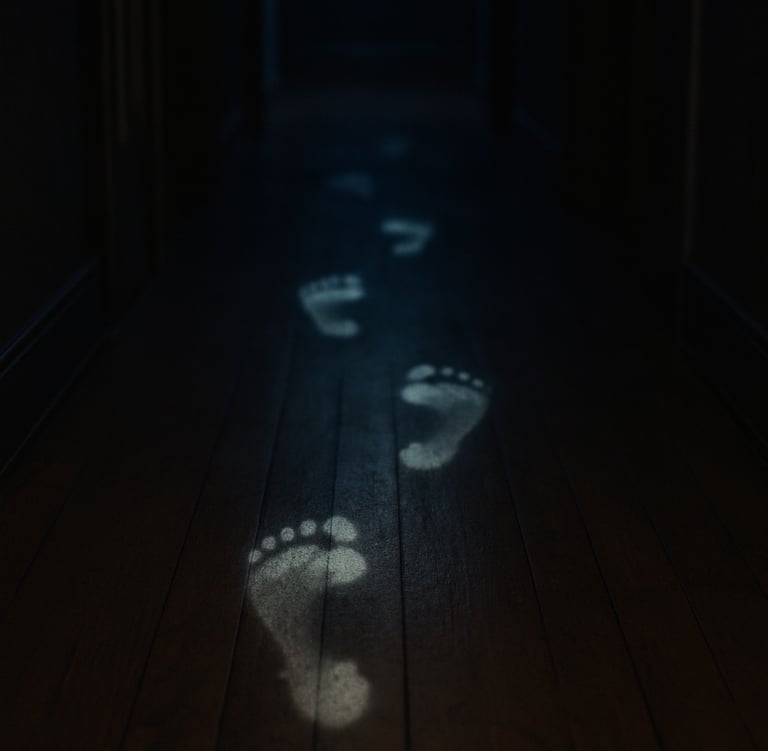
Footsteps in the hallway
that were too heavy to be anyone but him.
Too familiar.
Too exact.
Rhythms my body recognized
even while my mind tried to tell me it couldn’t be real.
The kind of footsteps
you feel in the floorboards
before you hear them.
My mother changed almost overnight.
Shock can do that.
Trauma can do that.
But this was something else.
Something darker.
Something that didn’t feel like grief
so much as possession.
“It was as if he left his body
but refused to leave our house.”
During the day,
she was sharp,
fractured,
volatile—
a woman unraveling faster than she could understand.
But when she slept—
only then—
she became my mother again.
Soft.
Exhausted.
Human.
As if sleep was the only time
she could slip from whatever had taken hold of her.
Looking back, I understand now
what I couldn’t then:
She wasn’t becoming a villain.
She was drowning.
And drowning people grab whatever is closest,
even if it’s their own children.
“I didn’t lose one parent that week.
I lost two.”
Those days between his death and his funeral
exist in my memory as a single stretched-out hour.
A strange, muted limbo
between losing a father
and losing the version of my mother
I knew before the world broke her.
BECOMING THE SHIELD
“you stay up…
countin’ down…
the days…
’til you make your escape…”
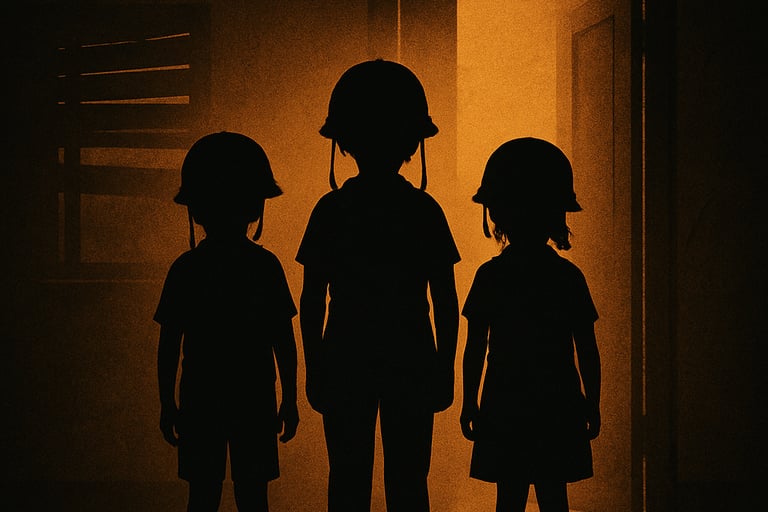
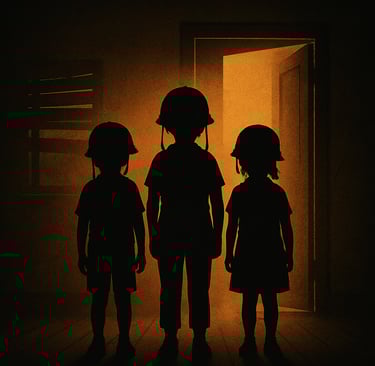
When a house becomes a battlefield,
children become soldiers
long before they understand the war.
I didn’t choose to be the shield.
I became it
because I thought it was the only thing
I was good for.
After my mother changed,
her anger didn’t drift aimlessly.
It found targets.
And I—
in the way only a traumatized child can—
believed I deserved it.
If her anger drifted toward a sibling,
I’d pull it back toward me.
A word.
A gesture.
A refusal to stay quiet.
Anything to re-center the storm
onto the child who had already decided
she was the source of the world’s pain.
I thought I was keeping the balance.
I thought this was my role.
I thought this was why I existed.
“I wasn’t brave.
I was conditioned.”
I didn’t think I was protecting them—
I thought I was absorbing what I deserved.
This wasn’t heroism.
This wasn’t sacrifice.
It was survival.
It was logic
in a house without any.
It was the moment
my childhood ended.
THE NIGHT THE WORLD WENT RED AND BLUE
“in the dead of night…
on that broken road…
i won’t let you walk alone…”
Trauma has a way of branding a night into your body
so deeply
that even decades later
you can still see the colors.
For me, it’s red and blue.
The kind that flash through windows
and carve themselves into the walls.
The kind that turn a staircase into an altar
you never meant to kneel on.
I remember that night like a damaged film reel —
missing frames,
jump cuts,
overexposed flashes of color and panic.
I remember him lying on the couch,
too still.
My mother cooking dinner,
her voice tightening as she noticed something wrong.
Then the sudden shift —
a blur of motion,
her calling his name,
the realization hitting all at once.
Then everything jumps.
I’m on the staircase.
My brother in my lap.
My sister beside us.
All of us pressed together
like we were trying to hold the house itself in place.
I remember getting sick right there —
not even able to move —
my stomach twisting from fear,
from trying to keep my siblings calm,
from trying to understand something far too big for any of us.
Then the lights.
The ambulance.
Red-blue-red-blue.
Colors splashing across the walls,
the floor,
my siblings’ faces.
I remember the sound of the gurney
catching on the doorway
because he was heavy
and they needed extra hands
to maneuver him out of the house.
I can still hear it —
that scraping,
the clatter,
the uneven rhythm of strangers trying to lift a man
who had just decided to disappear.
I remember the teachers
and the school staff
bringing cards of condolence
from kids who had no idea
they were writing to a child
who had lied every day
to hide a life she never wanted to confess.
Not because I wanted to deceive them.
Because I didn’t know how to let anyone
see the cracks.
Because I didn’t want pity.
Because pity felt like exposure.
Because exposure felt like danger.
We moved before I ever had to face them again.
I never said the words:
“This is what my life was.”
I just vanished.
That night didn’t just break the world I knew.
It rewired the child I was.
And even now,
when red and blue lights flash across a wall,
my body remembers before my mind does.
It remembers the weight on my lap,
the pressure of my sister’s hand,
the taste of fear,
the stillness of the man on the couch,
the scraping of the gurney,
the moment childhood ended
in a wash of colors
that never stopped stinging.

THE PEOPLE WHO STAYED, AND THE NAME I GAVE MY SON
“i won’t let you…
walk alone…
oh my brother…”
There are people who walk into your life
not as replacements,
not as saviors,
but as proof
that love can exist without conditions.
My stepdad didn’t inherit a family.
He inherited wreckage.
A mother gutted by grief.
Children trained by trauma.
A house that had learned to survive on fear.
He wasn’t handed a warm welcome.
He wasn’t greeted with trust.
He wasn’t stepping into a home —
he was stepping into a battlefield
still smoking from the last explosion.
We were wounded.
Suspicious.
Quick to run.
Quicker to lash out.
Clinging to each other with one hand
and pushing the world away with the other.
He didn’t get easy.
He didn’t get gratitude.
He got the aftermath.
And still…
He stayed.
Everyone told him to leave.
Told him he didn’t deserve this.
Told him to save himself.
Told him we were too much,
too broken,
too complicated,
too far gone.
And honestly?
If he had walked away,
I wouldn’t blame him.
Not then.
Not now.
But he didn’t.
He stayed when love was hardest.
And that’s when it mattered most.
He saw my mother drowning
and still tried to hold her up.
He saw us — the children —
tangled in trauma
and still reached for us.
He took blows from the storm
because he believed we were worth the effort.
And he wasn’t the only one.
Trauma teaches you to look for family
outside of blood.
People who show up
in small, unexpected ways.
Friends who become lifelines
without even realizing it.
Some friends were the first people
who ever made me feel seen
without judgment.
People who listened.
People who softened the world
just enough for me to breathe.
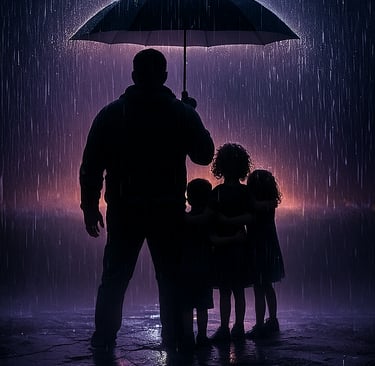
Sometimes the safest people in your story
are the ones you weren’t born to.
So when my son was born,
I stood at a crossroads
with two last names in my hands:
One was a curse.
A legacy of threats,
pain,
and generational poison.
The other was effort.
Commitment.
A man who stayed
even when it broke him a little.
A man who chose us
even when the world told him not to.
I refused —
utterly, completely —
to pass on my father’s name.
I would not hand my child a legacy of suffering.
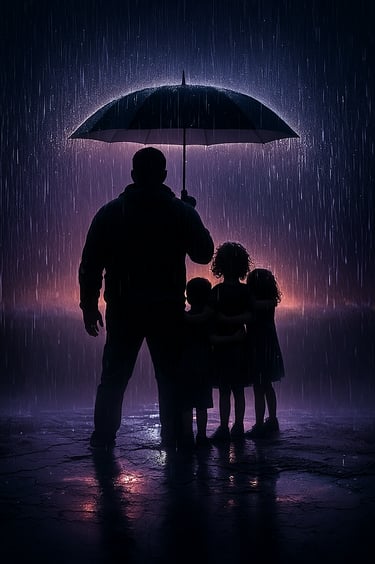
So I gave him
my stepdad’s last name.
It was my rebellion.
My gratitude.
My promise.
My break in the chain.
My way of saying:
“You don’t ever have to carry what I carried.”
It was the clean slate
I never had.
A different bloodline.
A different story.
A different ending.
Family isn’t who made you.
Family is who stayed.
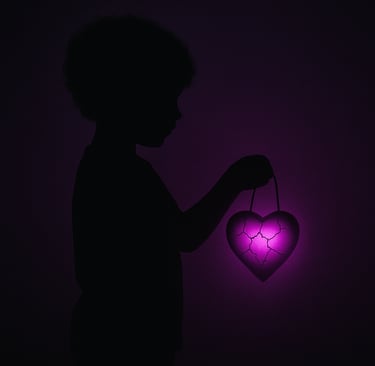


PARENTING WITH WOUNDS & FIGHTING THE PROPHECY
“you don’t have to…
follow…
in your bloodline…”
When I became a mother,
I didn’t enter parenthood with a clean slate.
I carried every wound of my childhood
into that delivery room
like invisible luggage no one else could see.
Trauma doesn’t stay behind.
It follows you.
Slips into your parenting.
Whispers in your ear when you’re tired.
Sits at the dinner table.
Watches from the shadows of every decision.
I swore I would never be like my parents.
I swore I would build something softer.
Something stable.
Something safe.
But healing doesn’t obey oaths.
It doesn’t transform overnight.
It doesn’t spare you because you want better.
There were days
when the weight of everything I hadn’t healed
spilled into my son’s world
without my permission.
Days when exhaustion spoke before I could stop it.
When fear sharpened my tone.
When burnout became a second language.
When the shadows of my own upbringing
leaked through the cracks.
And every time it did—
even in tiny ways—
my chest would twist with guilt so violent
it felt like drowning.
Because I never wanted him to feel
even a fraction
of what shaped me.
Awareness doesn’t erase mistakes.
But awareness is what breaks cycles.
Every time I caught myself,
every time I apologized,
every time I softened my voice,
every time I tried again—
that was cycle-breaking.
Not perfection.
Not miracle healing.
Not erasing trauma.
Just choosing differently
again and again and again.
But under all of it
was the prophecy he planted in me
with every manipulation,
every threat,
every “you’re the reason,”
every “you’ll be just like me.”
“I won’t make it to 35.
And neither will you.”
I carried that sentence
like a ghost in my lungs.
Every year closer to 35
tightened something in my chest.
Birthdays didn’t feel like celebrations—
they felt like countdowns.
Like I was racing a shadow
I didn’t ask to inherit.
Trauma convinces you
that curses are real
and that you are the thing doomed to repeat.
I lived with that belief
for decades.
But then the day came—
my 35th birthday.
The age he never reached.
The line he swore I wouldn’t cross.
And I did.
I crossed it.
I survived it.
I lived.
The moment I turned 35, the curse dissolved.
It didn’t get to own me.
And it will never touch my son.
For the first time in my life,
the future wasn’t a threat—
it was a possibility.
I realized then
that my son would never inherit
what I fought so hard to outrun.
Because I was the one
who stopped running
and stood my ground.
Because I was the one
who broke the bloodline.
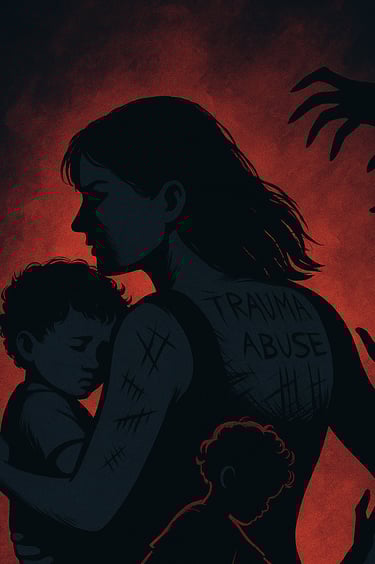
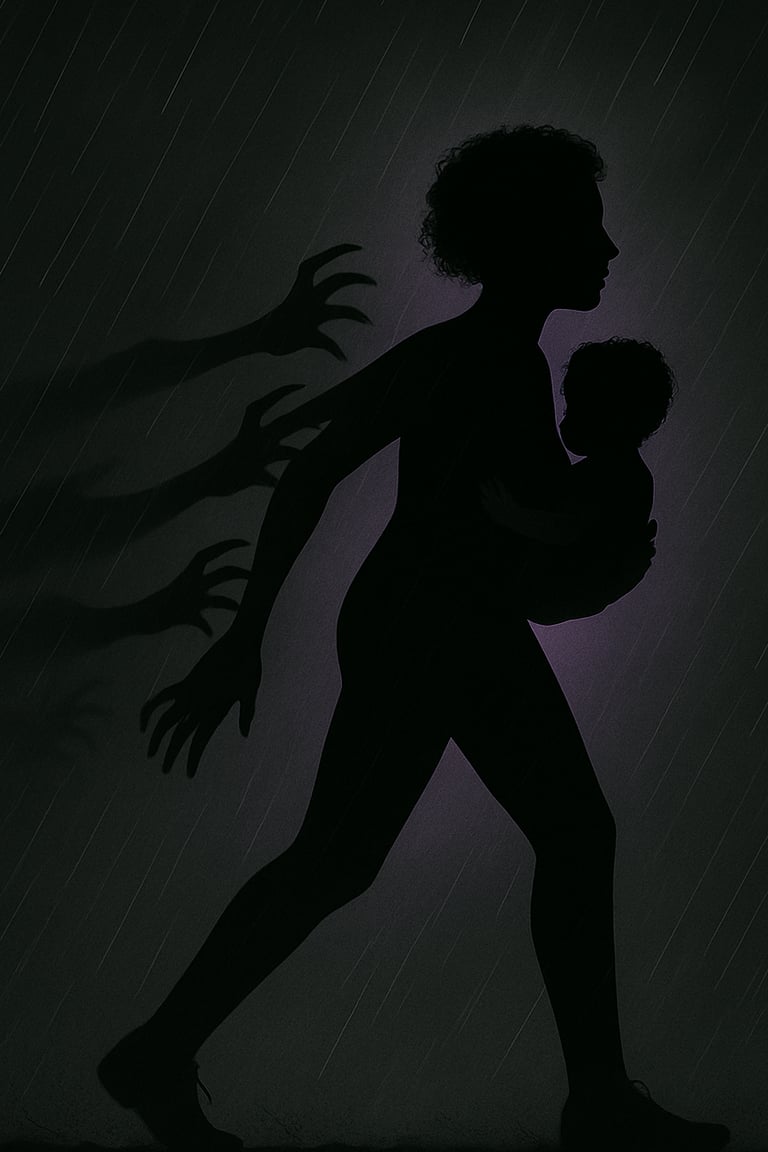
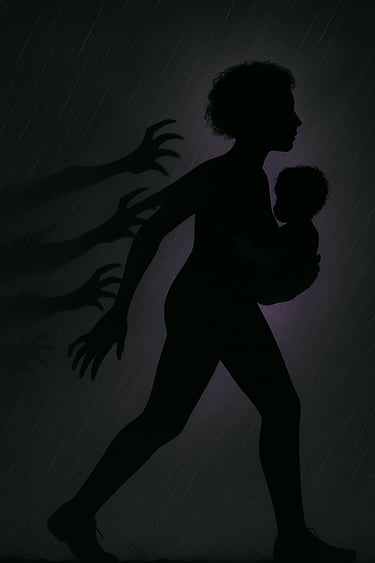
THE STORM DOESN’T DEFINE YOU — THE SURVIVAL DOES
“the storm keeps on ragin’…
but don’t you forget…”
The storm didn’t end when he died.
It didn’t lift when my mother broke.
It didn’t calm when I stepped into adulthood
or motherhood
or the years that followed.
Some storms stay with you.
Not as punishment,
but as memory.
As instinct.
As a shape your body learned too young.
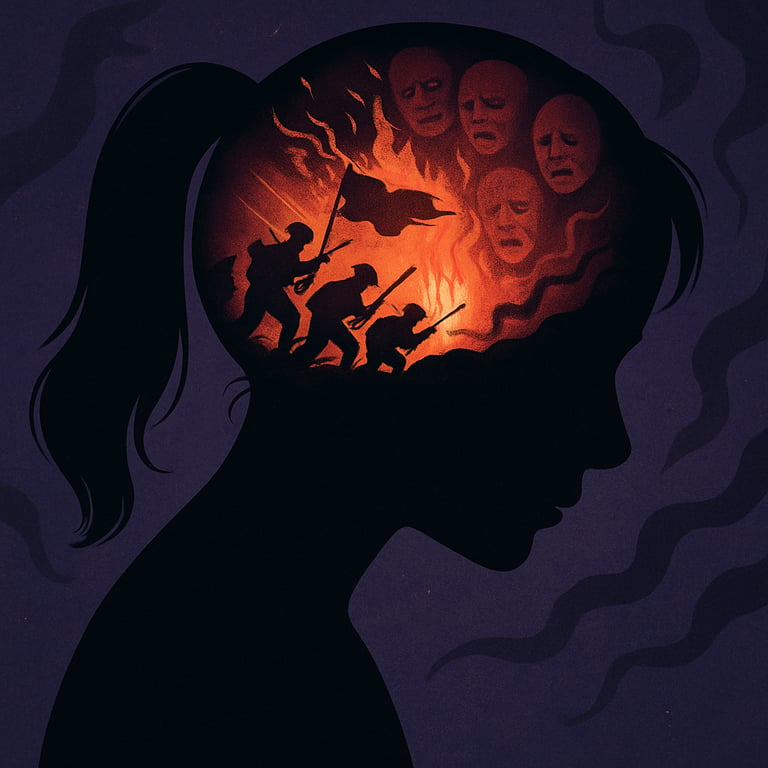
There were nights
when the war in my head
felt louder than anything outside it.
Nights when silence was terrifying.
Nights when my own thoughts
echoed with old voices
and old lies
and old fears
I didn’t even realize I had absorbed
until they slipped out of me.
There’s a particular cruelty
to trying to heal wounds
you didn’t create
but still bleed from.
There’s a loneliness
in realizing you are rebuilding yourself
from pieces you never broke.
And there’s a terror
in facing the parts of yourself
you were taught to hate.
But here’s the truth
trauma never wants you to know:
You are not the storm.
You are the one who walked through it.
Your father didn’t get to define your ending.
Your mother’s pain didn’t get to become your identity.
Your past didn’t get to own your future.
Not when you kept fighting.
Not when you kept breaking cycles
that nobody taught you how to break.
Not when you lived long enough
to realize survival is its own kind of victory.
“…god’s not done with you yet…”
“…this isn’t the end…”
Whether you believe in God,
or fate,
or nothing at all—
your story is not finished.
You walked through things
that should have destroyed you
and came out with a heartbeat
that still rises
every time it breaks.
You are living proof
that bloodlines can be rewritten.
That cycles can be shattered.
That curses can crumble.
That children raised in darkness
can become adults who build light.
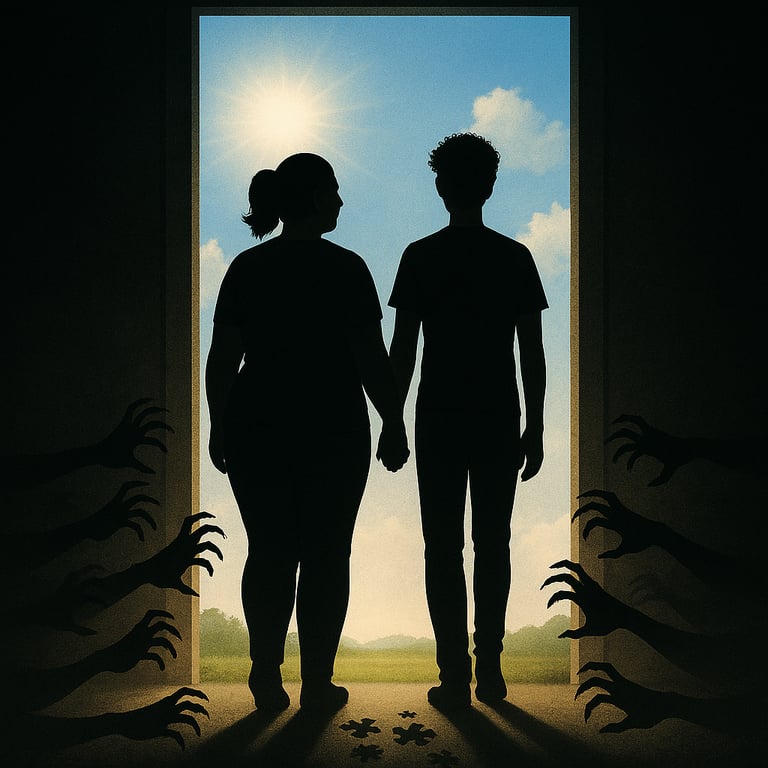
You didn’t just survive your bloodline.
You changed it.
You took everything that tried to end you
and forged something new from it:
A name for your son
that carries hope instead of harm.
A heart that learned defiance
instead of defeat.
A future that belongs
to you
and not to the ghosts behind you.
You are the first chapter
of a new beginning
your ancestors never imagined.
And if the storm still rages sometimes—
that doesn't make you weak.
It means you’re still here.
It means you’re still rising.
It means the part of you
that wasn’t supposed to survive
refused to die.
THE REWRITING OF A BLOODLINE
“…oh, my brother…
you don’t have to follow…”
There comes a moment —
sometimes quietly,
sometimes in a rush —
when you realize the story you were handed
is not the story you have to live.
For years, I thought survival meant enduring.
Absorbing.
Taking the hit so someone else didn’t have to.
Becoming the shield,
the buffer,
the one who swallowed the pain whole
so the house wouldn’t crack any further.
But survival isn’t the end of the story.
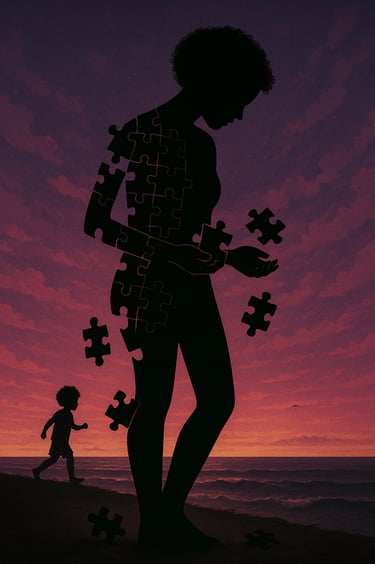
At some point, you stand there
with all the broken pieces of your history
scattered around your feet
and you understand:
You are allowed to build something new
from everything that tried to destroy you.
That’s what breaking a bloodline really looks like.
Not a single dramatic moment.
Not a clean separation from the past.
Not a perfect distance from those who hurt you.
It’s a thousand tiny choices
in the middle of the mess:
Softening your voice
even when fear wants to sharpen it.
Apologizing
even when shame wants to silence you.
Showing up
even when the world taught you to run.
Loving your child differently
even when your own childhood
taught you nothing about love except what it wasn’t.
Raising your son with a name
that isn’t poisoned.
Giving him a lineage
that starts with hope instead of horror.
You didn’t just rewrite your bloodline.
You ended the version of it
that was killing generations before you.
“…and if you’ve got tomorrow…
you’ve still got time…”
This is the part people don’t talk about:
breaking the cycle doesn’t make the pain disappear.
It doesn’t erase what happened.
It doesn’t silence the memories
or dissolve the instinct to flinch
when something echoes the past.
But breaking the cycle
means your child will never know
the version of you
the world created through trauma.
They will know the version
you fought tooth and bone to become.
They will know the version
that rose from the ashes
instead of sinking into them.
They will know the version
that carried the storm
so they never had to stand in it.
And that is how a bloodline changes —
when one heart refuses to pass the darkness on.
Your mother wasn’t a villain.
Your father wasn’t a prophecy.
Your childhood wasn’t a sentence.
They were beginnings.
Painful ones.
Shattering ones.
Ones that nearly convinced you
you were cursed
or doomed
or destined for the same ending.
But you lived.
You made it past 35.
You built a life from ruins.
You raised a child with gentleness
your parents were never taught.
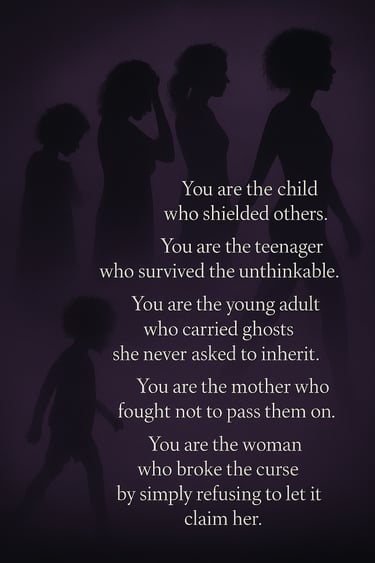
You became the person
your younger self needed.
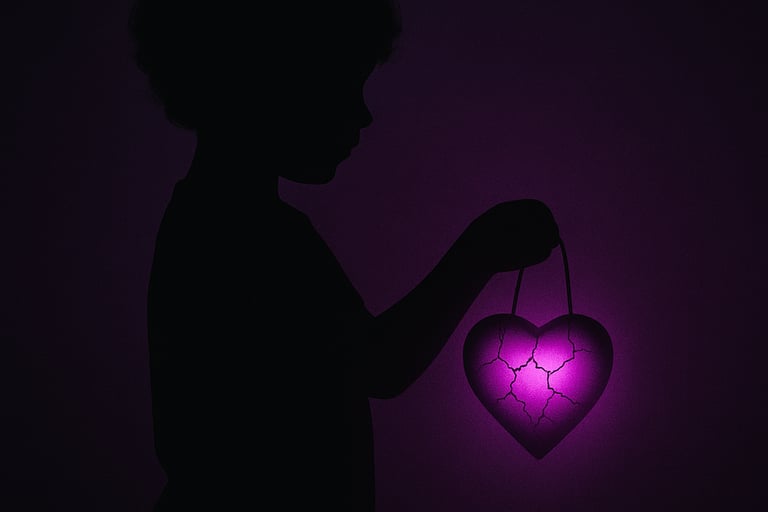
And that younger self —
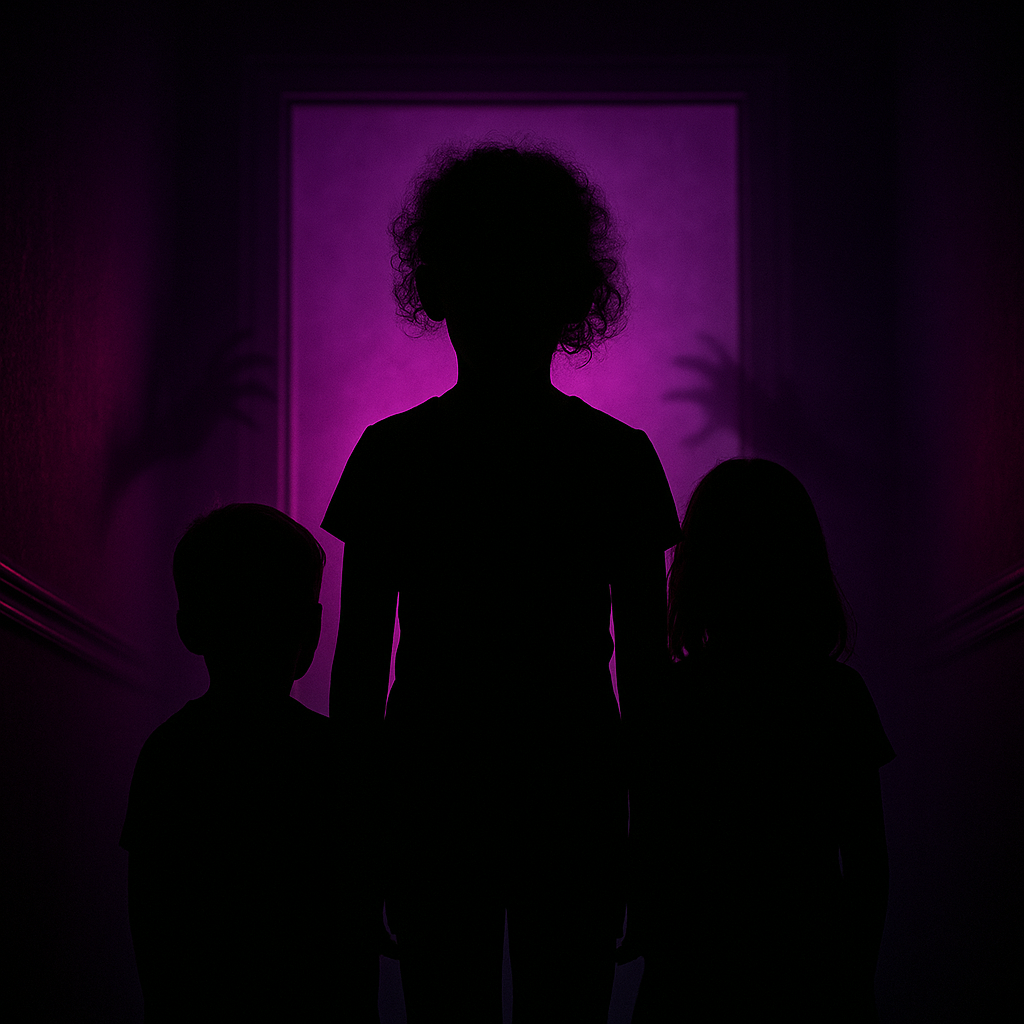
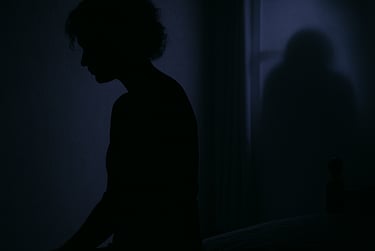
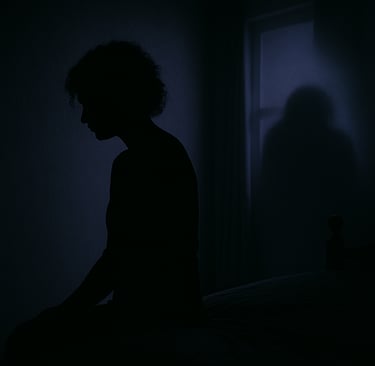
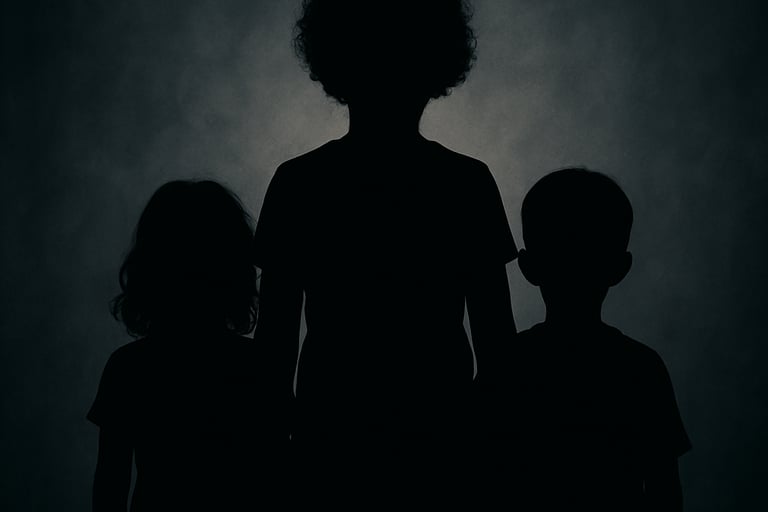
the one with the curly hair,
standing in front of her siblings,
shielding them from the world —
would look at you now
and finally understand:
You survived for a reason.
“…from where you came
isn’t who you are…”
You are your own creation.
Your own beginning.
Your own legacy.
Your own defiant heart.
And the story isn’t over.
It’s just finally yours.

Connect
Reach out to share stories or questions.
defiantheartcreations@outlook.com